Best Beaches in Paros, Greece: The Complete Island Beach Guide
Paros has around 50 kilometres of coastline. Not all of it is worth your time. The best beaches in Paros range from famous granite-boulder coves to quiet south-coast bays that most visitors never reach. I spent nearly ten days moving between them. Some I went back to twice. A few I would skip entirely on a second visit. This guide tells you which is which.
Quick Info
| Info | Details |
|---|---|
| Best beach for scenery | Kolimbithres beach, Naoussa area |
| Best beach for windsurfing | Golden Beach Paros, east coast |
| Best beach for locals | Monastiri beach Paros, Naoussa area |
| Best sheltered beach | Faragas, south coast |
| Sunbed prices | €30 to €100 per pair depending on beach |
| Getting around | Car or scooter rental recommended for south coast beaches |
| eSIM | Greece eSIM via Airalo — maps and navigation before you land |
| Where to stay | Where to Stay in Paros — full hotel guide by area and budget |
Kolimbithres: The Most Famous Beach in Paros
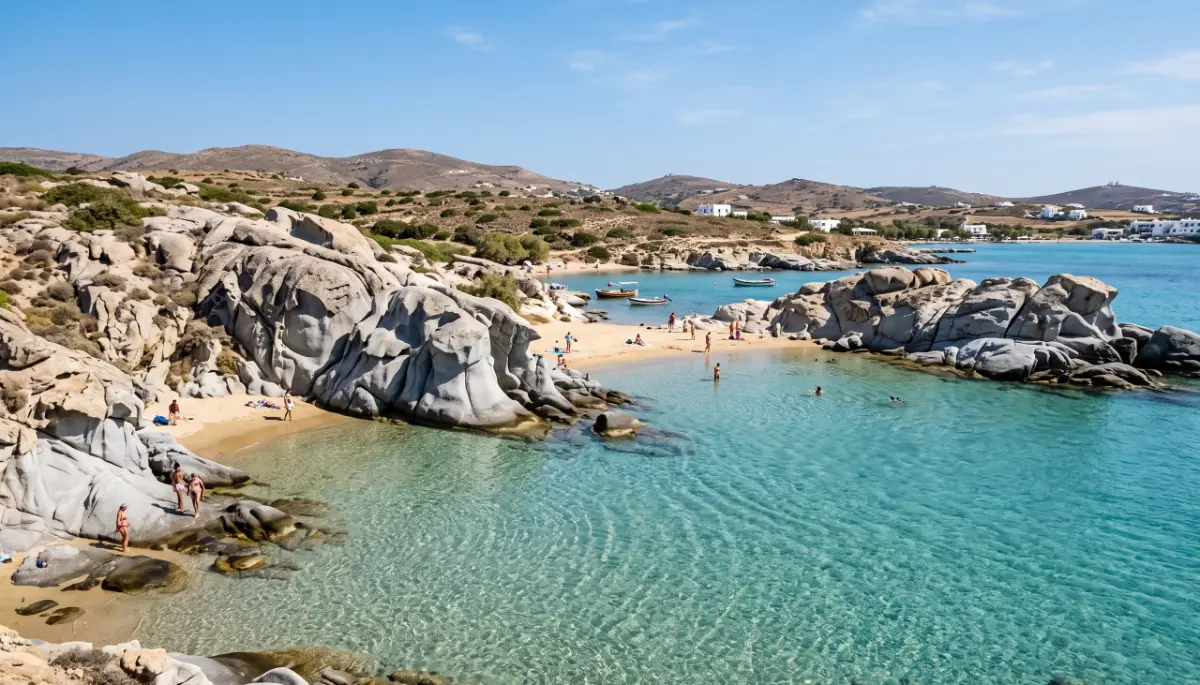
Kolimbithres is the beach that ends up in every photograph of Paros. The granite boulders are real. They are enormous, rounded by millennia of erosion, and they create a series of sheltered swimming coves that are unlike anything else in the Cyclades. The water between the rocks is calm, clear, and shallow enough for children.
It sits on the north coast near Naoussa, about fifteen minutes by car from the town centre. There is a taverna, a beach bar, and sunbed hire. In July and August it fills up by ten in the morning. Go early or go in September.
One thing the photographs do not show: the rocks are a surface. Climbing them in wet feet without water shoes is a reliable way to cut yourself. I learned this on my first visit. Bring footwear for the rocks, not just the sand.
For the best view of Kolimbithres from the water, this Naoussa Bay cruise with snorkeling passes directly through the boulders and is worth doing at least once.
Golden Beach: The Windsurfing Capital
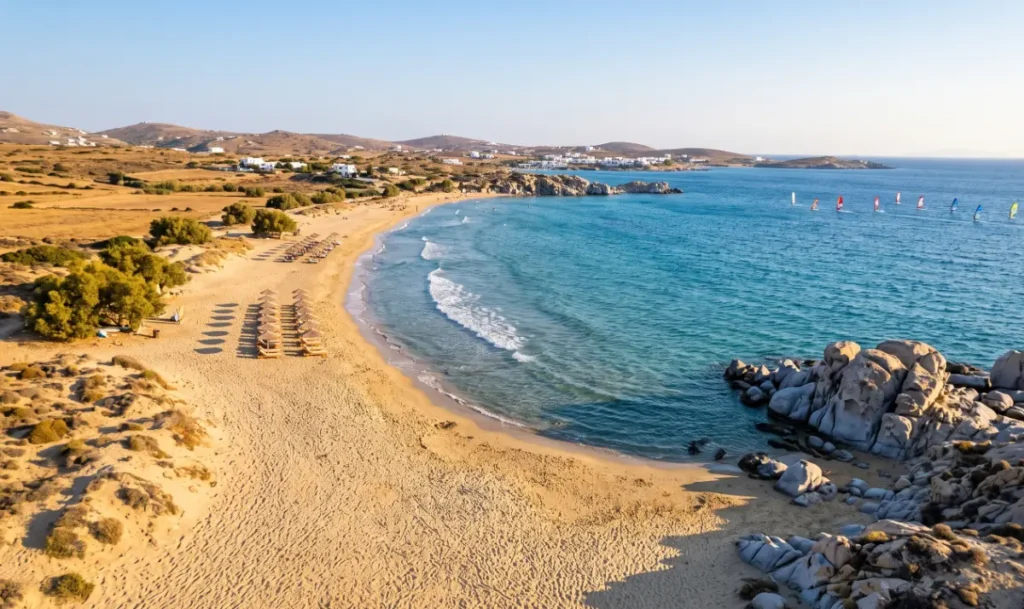
Golden Beach sits on the east coast, facing the open Aegean. The Meltemi wind arrives here with more consistency and force than almost anywhere else in the Cyclades. That makes it the top windsurfing and kitesurfing destination on the island. Paros Kite Pro Center operates directly on the beach with lessons, rentals, and storage.
The beach itself is long and sandy. The northern end is calmer and suits families and swimmers who are not there for the wind sports. The southern end is where the action is. On a strong Meltemi day, the water is choppy and fast.
I signed up for a beginner windsurfing lesson here on my third day. The instructor was patient. The Meltemi was not. I lost my grip on the boom, overcorrected, and went sideways into the water hard enough to bruise my shoulder on the board. I sat on the sand afterwards thinking: I cannot control my own attention for twenty minutes, and I thought I could control a sail in 25-knot wind. That is peak me. My ADHD had fully written cheques my shoulder could not cash. The instructor, to his credit, did not laugh. He suggested I come back on a lighter wind day. I did not.
New Beach, just north of Golden Beach, is quieter and better for straightforward swimming. The two are connected on foot in about ten minutes.
Monastiri Beach: The Local Favourite
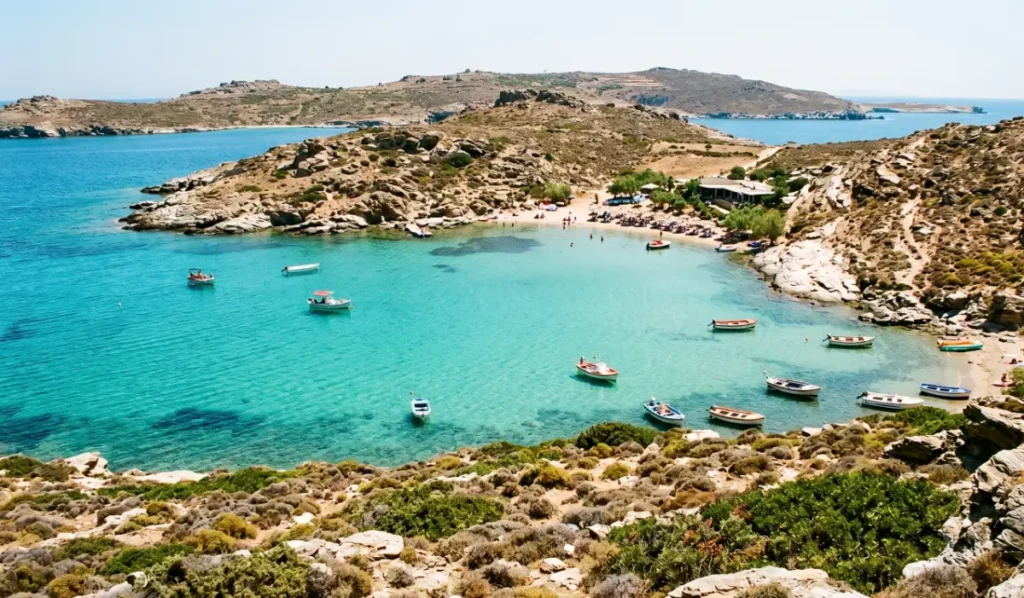
Monastiri sits just north of Naoussa, tucked below a small headland. It is one of the best beaches on Paros island for the combination of shallow water, atmosphere, and proximity to town. Most of the visitors here are either locals or people staying nearby. It does not feature prominently on travel sites, which is partly why it works.
The beach is a mix of sand and flat rock, with clear shallow water that warms up faster than the open-coast beaches. There is a beach bar and a small taverna. Sunbeds are available but the front rows are reserved. Book through the beach bar in the morning. Do not arrive at noon and expect a spot in the first row.
The walk from Naoussa to Monastiri takes about fifteen minutes along the coast path. It is one of the nicer short walks on the island. Coming by car is also easy, with a small car park nearby.
For a full guide to moving between the north coast beaches and the rest of the island, Getting Around Paros covers every option.
Krios Beach: Across the Bay from Parikia
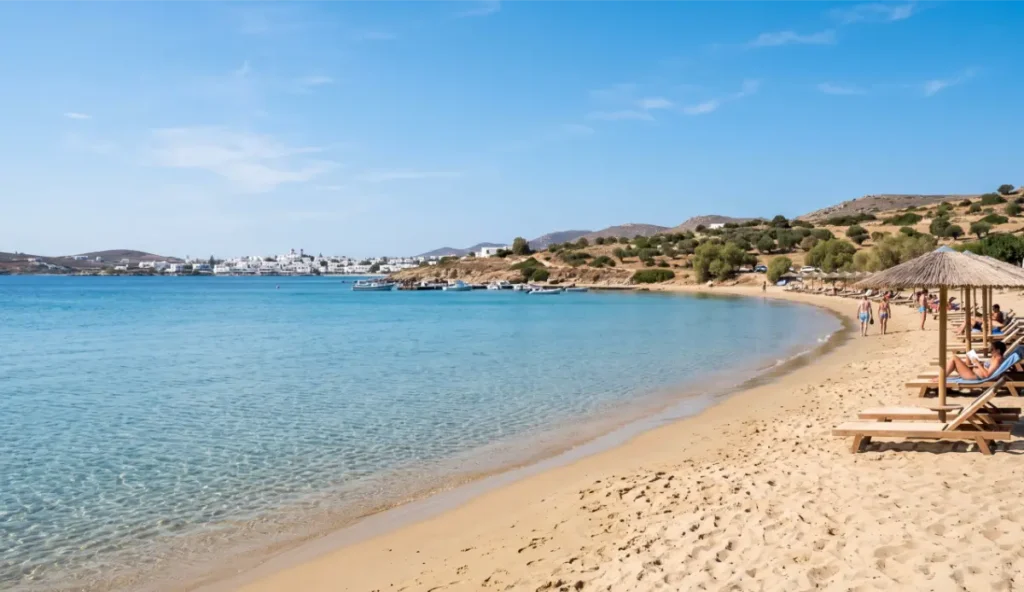
Krios sits directly across the bay from Parikia port. A small water taxi runs from the port every thirty minutes in summer. The crossing takes about five minutes.
The beach is a long stretch of coarse sand backed by low scrub. It is quieter than the north coast beaches and attracts a local crowd alongside visitors staying in Parikia. There is a beach bar and basic facilities. The water is clear and the bottom drops away gradually.
Santa Maria, on the northeast coast near Naoussa, is worth including here too. It is one of the few Paros beaches with organised water sports including paddle boarding, kayaking, and jet skiing. Families with older children tend to enjoy it more than Kolimbithres, which is better for younger ones.
Hidden Beaches Worth the Effort
The south coast of Paros rewards anyone with a vehicle and the willingness to drive past the main signposts.
Faragas is a small cove near Aliki on the southwest coast. It is one of the most sheltered beaches on the island. The Meltemi does not reach it the way it does the east coast, which means the water stays calm on days when Golden Beach is choppy. The access road is narrow and unpaved for the last five hundred metres. A small beach bar operates in season.
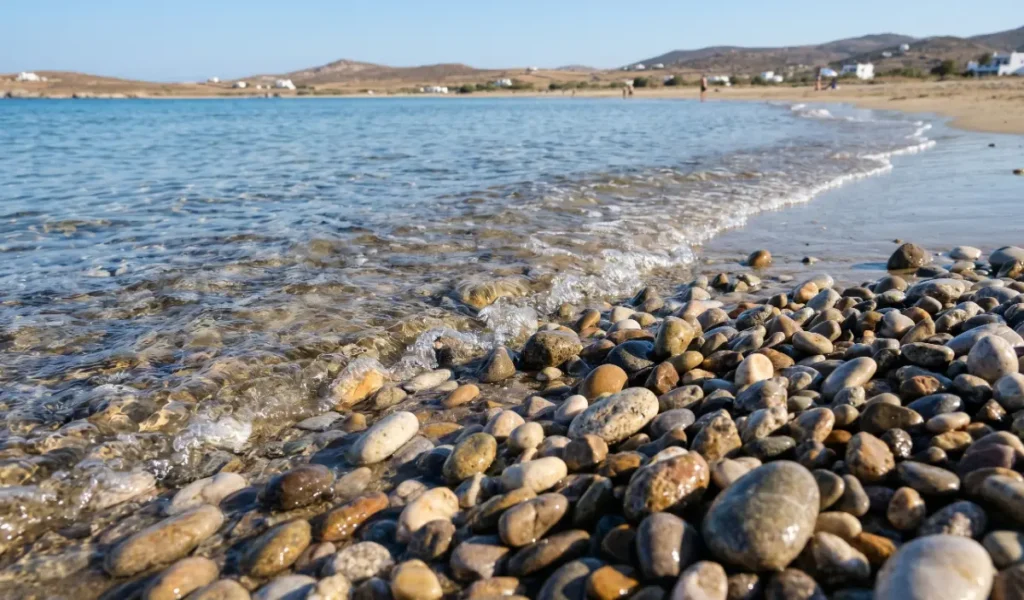
Kalogeros sits near Drios on the east coast. The beach is pebbly and the water is unremarkable. What makes it worth the visit is the clay. The cliffs above the shoreline are composed of natural bentonite clay. Swimmers cover themselves in it before swimming off. It looks eccentric. The skin afterwards is noticeably different. Most travel guides skip it. I went twice.
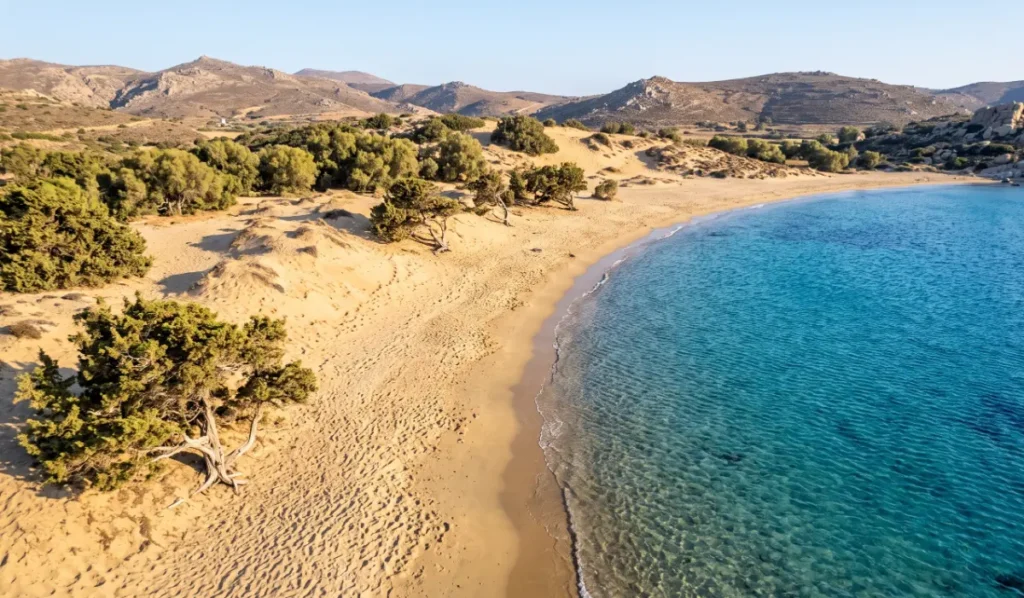
Pounta Paros, on the west coast near the Antiparos ferry crossing, is a long sandy stretch that the majority of visitors drive straight past on the way to the port. It is rarely crowded. The sunset from here is one of the best on the island. A Blue Lagoon boat tour departing from Pounta is the most efficient way to see the west coast coves without driving to each one individually.
Paros has more than fifty beaches along its coastline. Lageri, Tripiti, and a handful of other north and south coast coves reward anyone willing to explore beyond the signposted stops. None of them require a guide. They just require a vehicle and the willingness to turn off the main road.
Things to Do in Paros covers the rest of the island beyond the beaches, including day trips, boat rentals, and the inland villages.
Practical Tips
Arrive early at the popular beaches. Kolimbithres, Monastiri, and Santa Maria fill quickly in July and August. Before nine in the morning, you will find a spot. After eleven, you are looking at standing room only at the water’s edge.
Sunbed prices vary significantly. Expect €30 per pair at quieter beaches and up to €100 at premium spots. Monastiri front row and some Naoussa-area beach bars are at the higher end. Budget accordingly or bring your own towel.
The south coast requires a vehicle. Faragas, Kalogeros, and the quieter coves near Aliki are not reachable by bus. Renting a car or scooter in Paros opens up the entire south coast and makes a meaningful difference to your beach options.
Water shoes for Kolimbithres. The rocks are genuinely slippery when wet. It is not optional if you want to move between the coves without incident.
Get an eSIM before you arrive. The south coast roads are not always well-signed. A Greece eSIM from Airalo keeps navigation working from the moment you step off the ferry.
FAQ
What is the most famous beach in Paros? Kolimbithres is the best-known beach on the island. The large rounded granite boulders create a series of sheltered coves with calm, clear water. It sits on the north coast near Naoussa and is most famous for its scenery. Go early in summer to avoid the crowds.
What is the best beach on Paros island for windsurfing? Golden Beach on the east coast is the top windsurfing destination. The Meltemi wind arrives consistently from July and creates strong, reliable conditions. Paros Kite Pro Center operates directly on the beach with lessons and equipment for all levels.
Are Paros beaches crowded in summer? The most popular beaches, particularly Kolimbithres and Monastiri, get busy from late July through August. The south coast beaches and Krios Paros are significantly quieter throughout the season. Going before nine in the morning makes a real difference at the busiest spots.
How much do sunbeds cost in Paros? Prices range from around €30 per pair at quieter beaches to €100 at premium spots near Naoussa. Monastiri front row and several Naoussa-area beach bars are at the higher end. Many beaches have free sections away from the sunbed area.
Can you reach the best Paros beaches without a car? The main north coast beaches, Kolimbithres and Monastiri, are reachable from Naoussa on foot or by taxi. Krios is accessible by water taxi from Parikia port. Golden Beach is served by the KTEL bus from Parikia. The south coast best beaches in Paros require a car or scooter.
What is Monastiri beach like in Paros? Monastiri is a mix of sand and flat rock just north of Naoussa, known as a local favourite for its shallow warm water and relaxed atmosphere. It is less prominent on travel sites than Kolimbithres but consistently rated higher by people who have been to both. Arrive early and reserve sunbeds through the beach bar if you want the front row.
Planning Your Stay
Paros beaches work best when you are based in the right area for your priorities. Naoussa puts you closest to Kolimbithres and Monastiri. Parikia gives you easier access to Krios, the east coast buses, and the south coast roads. Where to Stay in Paros breaks down every area and budget. For getting between beaches without stress, How to Get to Paros covers the full transport picture including 2026 ferry schedules. Still deciding between islands? Paros vs Santorini lays out every difference that actually matters.